

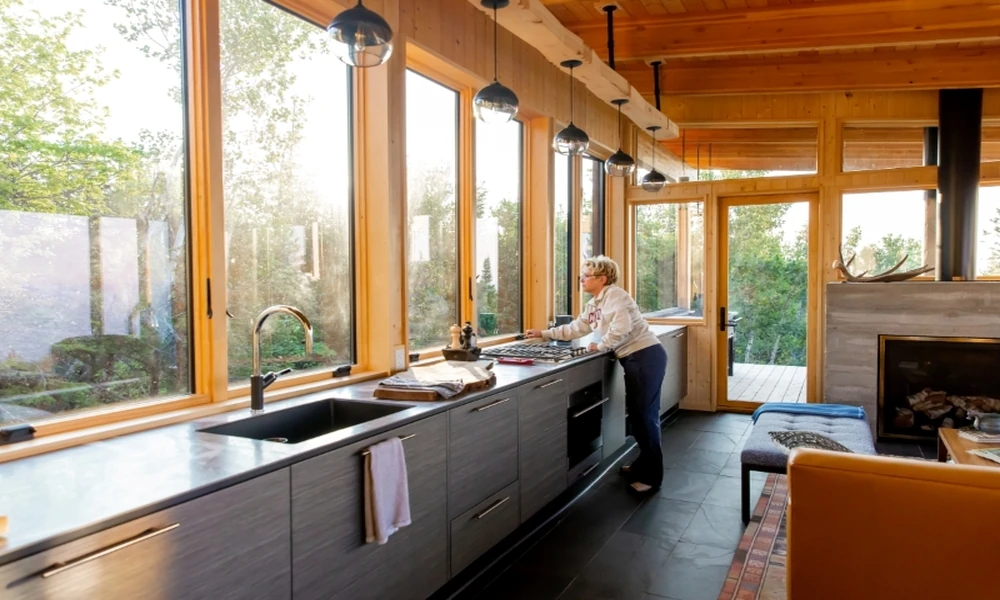
Any Twin Falls window installation may need to meet Idaho’s adopted energy code, depending on the work involved. Idaho adopted the 2018 International Energy Conservation Code with state amendments, effective January 1, 2021. The City of Twin Falls requires remodel plans to follow the currently adopted residential and energy codes with Idaho amendments.
Before getting a quote, check what the contractor plans to remove. Some jobs involve taking out the old frame and installing a new window, while others replace only the glass in the existing frame. Have the contractor list the work included in the quote. The distinction can affect which energy code provisions apply.
The code’s main window test is the U-factor, which measures heat loss. A lower number means less heat escapes. The U-factor requirement depends on the type of window work being carried out:
- Replacing an existing window with a new fenestration product that includes the sash and glazing requires the replacement unit to meet the applicable U-factor and SHGC provisions.
- Replacing only the glass while retaining the existing sash and frame is treated as a glass-only repair, not a complete fenestration-unit replacement.
- Storm windows installed over existing windows are exempt from the new-construction energy requirements, provided the building’s energy use does not increase.
- A window installed as part of a garage conversion or another project that creates newly conditioned space must meet the applicable requirements. The City’s garage-conversion guidance specifies a maximum U-factor of 0.30 for windows and exterior doors.
- Adding a new window to an existing wall generally requires a City building permit. The added window must comply with the energy rules for that project.
Which U-Factor Number Applies in Twin Falls
Idaho’s amended 2018 energy code lists a maximum fenestration U-factor of 0.32 for Climate Zone 5. Twin Falls belongs to this zone. The City’s garage-conversion guidance gives a stricter figure of 0.30 for windows and exterior doors in newly conditioned space. That limit applies to garage conversions and should not be used as the general replacement-window standard. Before ordering, ask the City which requirement applies to the planned work.
What the NFRC Label Shows
The Department of Energy advises looking for an NFRC label to compare the overall properties of a window. The label lists the rated U-factor for that exact product. Ratings can differ between styles within one product line, so check the label for each style and size on the order. Check the applicable Idaho code table for the solar heat gain coefficient (SHGC) requirement, as this value may vary by climate zone and project type.
Window dimensions and style can affect the rating shown on the NFRC label. A large picture window, for example, may have a different rated U-factor from a smaller window in the same product range. Ask for the specifications of the exact sizes and styles included in the quote. If the contractor proposes a substitute during ordering, request its updated NFRC information before approving the change.
Nu-Vu Glass offers windows from manufacturers including Milgard, Weather Shield, and Andersen, and owners can ask to see the label for each style under consideration.
Save the NFRC labels and the contractor’s paperwork after installation. The inspector may ask to see the window ratings or product details. Keep the permit and inspection approval with those records if the job required a permit.
Winter Heating Costs and the Limit
Heat gain and loss through windows account for 25 to 30 percent of residential heating and cooling energy use. Twin Falls averages a July high of 85°F and a January low of 18.6°F, a difference of about 66 degrees. Windows with lower U-factors transfer less heat through the glass and frame, which can help reduce winter heat loss.
