

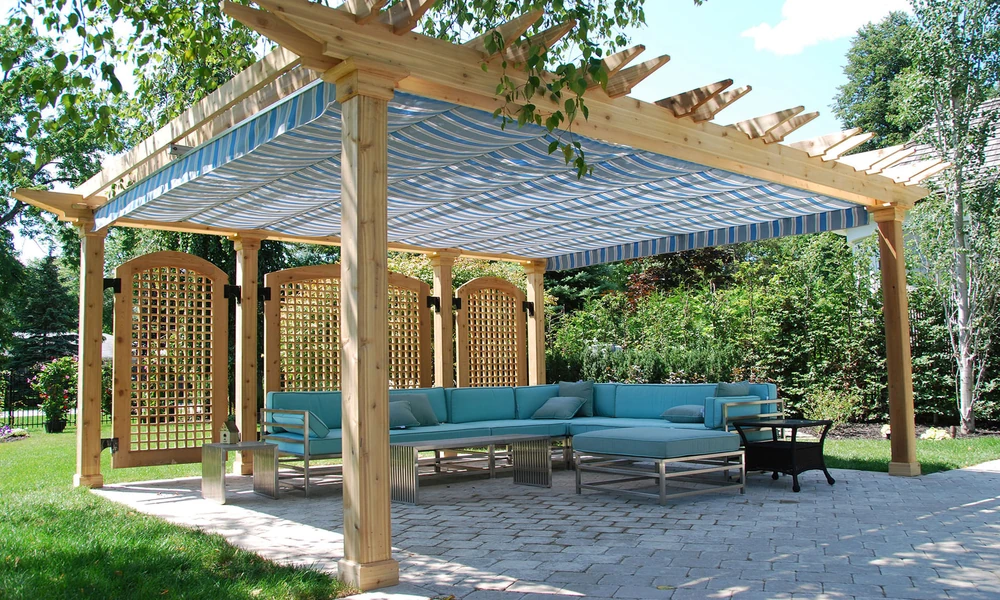
A pergola looks like the perfect answer to a hot, sunny yard. Then summer arrives, the sun beats straight through the open beams, and the family still eats dinner squinting. A basic pergola creates a feeling of shelter, but it does not guarantee actual shade. The good news is that there are many ways to add real protection, from simple design choices to full shade systems. This guide explains the options so you can plan for the comfort you want from the start.
Why a standard pergola gives only partial shade
A traditional pergola has an open roof made of beams and crosspieces. The spacing between them lets light and air through, which is part of the charm, but it means shade shifts and fades as the sun moves across the sky. At midday, with the sun high overhead, the pattern is often a series of stripes that barely cut the heat.
Before choosing a solution, spend a day noticing how the sun moves across the spot you have in mind. Note where it hits in the morning, at midday, and in late afternoon, because the west side usually gets the hottest and lowest sun. That pattern will tell you whether you need overhead cover, side screening, or both.
Design for shade before the first post goes in
Shade is easiest to build into the structure. Rafters placed closer together block more sun, and a second layer of slats set at an angle across the first can cut light much further. The direction of the roof members matters too, since slats running east to west throw different shadows than those running north to south. A builder can help you test spacing and orientation against your yard.
Homeowners comparing Arapahoe County pergolas services should ask each builder how they plan shade, not just how they plan the frame. Request a simple sketch showing the proposed rafter spacing, the roof direction, and any shade add ons, and ask what the shadow will look like at different times of day. Ask about footings, anchoring, and how the structure is designed to handle wind and snow, because local weather puts real stress on open frames.
Compare the shade options side by side
Here is how the main choices stack up. The ratings are general, and actual results depend on materials, installation, and your site.
| Option | Shade level | Upkeep | Good for |
|---|---|---|---|
| Closer or layered slats | Light to moderate | Very low | A permanent look with filtered light |
| Climbing vines on the frame | Moderate to heavy in season | Moderate | A natural look and cooler air |
| Shade sail or fabric panels | Moderate to heavy | Moderate | Quick, budget friendly coverage |
| Retractable canopy | Heavy when closed | Moderate | Flexible shade that you control |
| Adjustable louvered roof | Light to heavy | Low to moderate | Full control and rain protection |
| Solid or translucent panels | Heavy | Low | Maximum cover and weather protection |
No option is best for everyone. Slats cost the least and last the longest, but they filter the sun and do not block it. Louvered roofs and solid panels give the most control, but they cost more and may involve additional engineering and permits. Fabric options are flexible and affordable, but they should be taken down or retracted in strong wind and heavy snow.
Let plants do part of the work
Climbing plants are one of the oldest ways to shade a pergola, and they cool the air around them as they grow. The U.S. Department of Energy notes in its guide to landscaping for shade that a trellis with climbing vines can shade a patio area, and that vines can start shading walls during their first growing season. It also advises choosing plants adapted to the local climate, including drought tolerant species in arid regions.
Vines take time, need a strong support system, and require pruning so they do not damage the structure or crowd out airflow. Choose varieties that suit your region, avoid aggressive species that spread where you do not want them, and ask your builder to size the beams for the extra weight of mature growth. Deciduous plants have a bonus: they leave the sun to warm the space in winter after dropping their leaves.
Plan for wind, snow, and everyday use
An attractive shade plan has to survive the weather. Wide fabric panels act like sails in strong wind, solid roofs collect snow, and tall frames need solid anchoring. Ask the builder what loads the design is built to handle and what you should do before storms. Also think about how you will use the space. If you want to dine or work under it, check where the afternoon sun lands on the table, and consider adding side screens, curtains, or slatted panels on the west side.
Lighting, fans, and heaters are easier to wire during construction, and a good plan leaves room for them. Make sure electrical work is done by a licensed professional and permitted if required.
Choose materials that fit your goals
Wood offers warmth and flexibility but needs regular sealing or staining. Vinyl and aluminum resist weather and need little maintenance, though the look is more modern. Fiberglass and composite options sit in between. Ask for samples, warranty terms, and photos of finished projects that have been through several seasons, so you can see how the materials age.
The shade plan in short
A pergola can be a place you actually want to sit in the afternoon, but only if shade is part of the plan from day one. Watch how the sun moves across your yard, then choose a design that fits: closer slats for a light touch, vines for a natural canopy, fabric or retractable covers for flexibility, or louvers and panels for full control. Make sure the structure is built for local wind and snow, plan for lighting and power early, and ask your builder to show you how the shade will work at different times of day.
Get those pieces right and the pergola stops being a decorative frame and becomes the most used part of the yard. Take the time to plan, compare options in writing, and choose a builder who answers your questions clearly. You will end up with a space that stays comfortable through the long days of summer and looks good in every season.
