

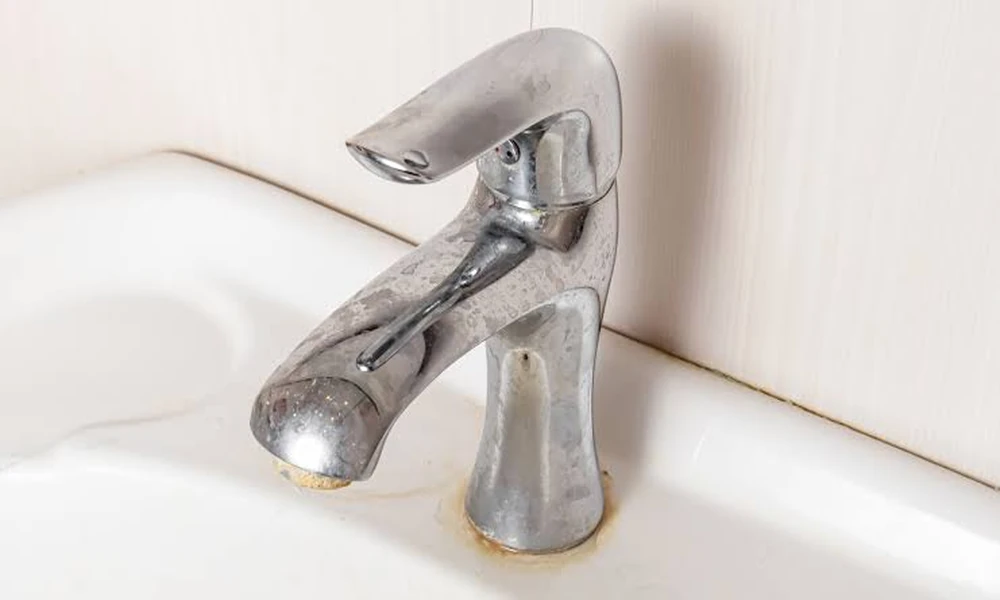
Water leaves a signature everywhere it travels. Anyone who has watched a Baldwin County plumber lean over a bathroom sink knows that one of the first things they do is look at the color around the base of the faucet. That little ring of crust or stain is a surprisingly honest report on what the water has been doing inside your pipes. Here is how to read it, what it costs to ignore it and which simple habits keep small problems from becoming big ones on the Gulf Coast.
Blue Green Means Copper Is Leaving
A blue or green stain under a dripping faucet, in a shower or around a drain is the classic sign that copper is dissolving into the water. Corrosive water slowly eats away at metal pipes and fittings, and copper is the main target. A little stain does not mean your plumbing is about to fail, but it does mean the pipes are losing material, and over the years that loss adds up to repairs or replacement.
The same process can leave stains on laundry, fixtures and hair, so a greenish tint after a shower is worth taking seriously.
Rust Colored Streaks Point to Iron
Orange or brown stains tell a different story. Iron is the usual suspect, and it can come from old steel pipes, from the water source itself or from both. Iron rarely causes health concerns at household levels, but it does ruin tubs, tiles and light clothing, and it can clog aerators and fixtures over time. Keep a note of where the stains show up, because that detail helps a plumber decide whether the trouble starts in the pipes or arrives with the supply.
The Taste Test Nobody Wants to Take
Elevated copper often gives water a bitter, metallic edge, which is one reason people notice it before they notice a stain. Lead is the opposite and a far more worrying case. It has no taste at all, even at levels that are harmful, and homes with older metal fittings or lead solder can release it into the water.
That is why guessing by taste is never enough. If your house is older, or the water tastes off, a lab test is the only way to know for certain what you are drinking.
What Makes Water Bite
Corrosive water is not the same as dirty water. It can look clear and still wear down metal. Several traits make water more aggressive.
- A low pH, generally below 7, with readings under 6 being highly corrosive
- Low alkalinity, which leaves water with little to buffer it
- High conductivity, a rough indicator of dissolved solids
- Higher water temperature
Rainwater is a good example of low alkalinity doing damage, which matters for anyone collecting it. Even water with a near neutral pH can still be corrosive if its alkalinity is very low. The Alabama Cooperative Extension System explains these thresholds clearly in its guide to water corrosivity and plumbing.
Wells, Utilities and Who Owns the Problem
Baldwin County is a patchwork. Some homes draw from municipal systems, while many others, especially outside the busy corridors, rely on private wells. That split changes who is responsible. Utility customers can ask their provider for its latest water quality report. Well owners are on their own, and nobody will test the water unless they do it themselves.
Whichever camp you belong to, the pipes inside your house are your responsibility, and they react to whatever flows through them.
The Water Heater Keeps Score
Heat speeds up corrosion, so the hot side of your plumbing often shows trouble first. A tank water heater lives in a constant battle with minerals and temperature, and it is worth asking a technician to look at it during any plumbing visit. Rust colored hot water, rumbling noises, puddles near the base or a tank that no longer keeps up with demand are all reasons to schedule service rather than wait.
One habit costs nothing. Do not use water from the hot tap for cooking or coffee, since hot water can pick up more metal from the pipes. Heat cold water on the stove instead.
Storm and Cold Snap Homework
The Gulf Coast does not freeze often, but when it does, plumbing built for mild weather pays for it. Before a cold snap, wrap exposed pipes, drain outdoor lines or let a slow trickle run, and empty in-ground sprinkler systems. Before hurricane season, make sure everyone in the house knows where the main shutoff valve sits and that it actually turns. A valve that has not moved in ten years can seize up when you need it most.
A Short Routine That Actually Helps
If any of the signs above sound familiar, this sequence is a sensible way to find out what is going on.
- Run the cold tap until the water turns cold before filling a glass or a cooking pot
- Collect a sample after the water has sat in the pipes for six or more hours
- Send it to an EPA or ADEM certified lab, asking for copper and lead, plus cadmium and zinc if you have galvanized pipe
- If results come back high, collect a flushed sample to learn whether the source or the plumbing is responsible
- Use tested bottled water for drinking while the issue is addressed
Treatment depends on the cause. Calcite chips or an acid neutralizing tank can raise pH for many well systems, and a feed of soda ash or baking soda is another option. Retest after any change, because treatment sometimes needs adjusting.
Local Help Without the Sales Pitch
If the stains keep returning or the test results worry you, bring in someone who handles water as well as pipes. Perdido Heating and Air, based at 5555 Bauer Road in Pensacola, serves Baldwin, Escambia and Santa Rosa counties and lists plumbing, water heater service and sales, water purification equipment and insulation among its services. You can reach the shop at (850) 972-1714 to ask about an estimate.
Whatever you decide, treat that colored ring around the faucet as information rather than a nuisance. It is the cheapest early warning your plumbing will ever give you.
