

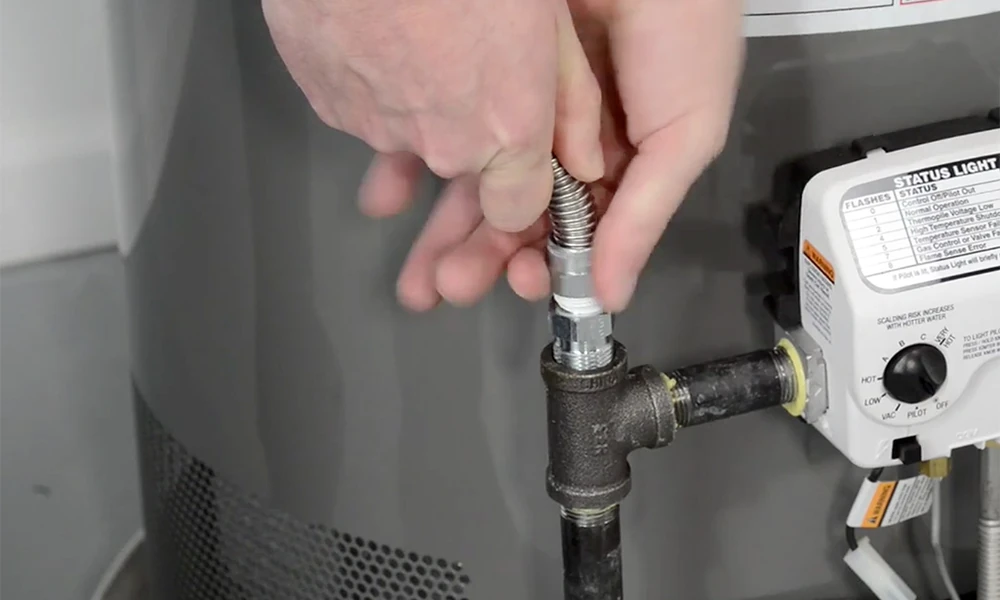
Water heater replacement costs can vary dramatically even when two homes need roughly the same amount of hot water. A straightforward tank-for-tank changeout may require little beyond the new unit, connections, labor, and disposal. Converting to tankless can involve gas piping, venting, electrical work, mounting changes, and additional installation time. Current national market ranges commonly put conventional tank replacements around $900 to $2,500, while many tankless projects fall around $1,400 to $4,000 or more when substantial conversion work is required.
The largest price differences usually come from conditions around the heater rather than from the appliance alone. Fuel type, capacity, access, vent configuration, shutoff valves, drainage, electrical supply, gas-line sizing, and local permit requirements can all change the scope. Iowa City currently enforces the 2024 Uniform Plumbing Code alongside its locally adopted construction standards, so an older installation may need more than a simple equipment exchange when existing components do not meet the requirements applicable to the new work.
For homeowners considering Iowa City water heater installation, A1 Sewer Service provides water heater installation along with emergency plumbing and leak detection across Iowa City, Cedar Rapids, and surrounding eastern Iowa communities in Johnson, Linn, Iowa, and Washington counties. That combination can be useful when a failing tank is already leaking or when the source of unexpected water around the unit is unclear. Homeowners can request a quote based on the actual installation conditions rather than treating a generic appliance price as the entire project.
| Cost item | What it covers | What pushes it higher or lower |
|---|---|---|
| Water heater | Tank or tankless unit | Capacity, fuel type, efficiency |
| Installation labor | Removal, connections, setup, testing | Access, conversion complexity |
| Venting | Exhaust and combustion-air components | Fuel change, vent relocation |
| Plumbing changes | Valves, piping, fittings | Corrosion, relocation, old connections |
| Electrical or gas work | Power or fuel supply | Tankless conversion, larger demand |
| Permit and inspection | Local compliance process | Project scope and trade work |
| Haul-away | Removal and disposal of old heater | Size and access |
| Added protection | Expansion tank, drain pan, shutoffs | Existing system and code needs |
The Unit Sets the Starting Number
Tank-style heater: Conventional storage models remain the lower-cost starting point for many replacements. A typical national-market installation can range from roughly $900 to $2,500, although larger tanks, high-efficiency models, fuel changes, and difficult locations can move the project beyond that range.
A tank heater stores a fixed volume of hot water, commonly 40 or 50 gallons in residential settings. That makes sizing relatively intuitive, but buying the biggest available tank is not automatically useful. Household size, simultaneous hot-water demand, available space, and recovery rate matter.
Tankless heater: On-demand systems usually begin at a higher installed price, with many residential projects falling roughly between $1,400 and $4,000 before unusually complicated modifications.
The attraction is different. Tankless systems heat water as it is used rather than maintaining a full tank at temperature. The U.S. Department of Energy’s water-heater guidance distinguishes storage, instantaneous, and heat-pump water heaters and sets efficiency standards according to equipment type and capacity.
The higher tankless price is often not just paying for the heater. It is paying to make the house compatible with it.
Labor Depends on Whether It Is a Swap or Conversion
Like-for-like replacement: Labor is usually simplest when the new heater uses the same fuel, occupies the same location, and works with existing connections that remain serviceable.
The installer still needs to disconnect and remove the old tank, set the replacement, make plumbing and fuel or electrical connections, test operation, and confirm that the system is safe.
Tankless conversion: Moving from a storage tank to a tankless system changes the labor considerably.
A wall-mounted unit needs a suitable mounting location. Water piping may need rerouting. A gas model can demand more fuel at one time than the old tank heater, while an electric tankless model can impose substantial electrical demand.
That is why comparing only the retail prices of two heaters gives an incomplete picture.
Venting Can Be a Small Detail or a Major Upgrade
Existing vent: A gas storage heater may already have a suitable venting arrangement, making replacement relatively straightforward if the new appliance is compatible.
New vent system: High-efficiency or tankless gas equipment may require a different vent material, diameter, route, termination, or combustion-air arrangement.
Changes become more involved if the new route has to pass through walls or ceilings or terminate at a different exterior location.
Venting is also a safety component. It carries combustion products outside the building, so it cannot be treated as an optional accessory added after the heater has been selected.
Permits and Code Work Belong in the Total
Plumbing permit: Iowa City requires plumbing permits for various types of plumbing alterations and repairs, with trade permits handled through the city’s permitting process.
The city’s Building Inspection Services currently lists the 2024 Uniform Plumbing Code among the standards it enforces. Iowa City also requires licensed plumbing contractors for applicable permitted work, although qualifying homeowners have limited provisions for work on their own residences.
Inspection: Permit-related work may need inspection before the project is considered complete.
A replacement can also expose older conditions that need correction. The fact that a valve, vent, connector, or piping arrangement worked with the old heater does not necessarily mean it should automatically be reused.
Shutoffs, Expansion Tanks and Drainage Add Smaller Lines
Shutoff valve: A functioning water shutoff near the heater allows the appliance to be isolated without shutting down the entire house. Corroded or unreliable valves may be replaced during installation.
Expansion tank: Closed plumbing systems can experience pressure increases as heated water expands. Depending on the system design and applicable requirements, a thermal expansion control device may be needed.
Drain pan: A pan and appropriate drainage can limit damage if the heater leaks, especially where the tank is installed above finished areas or in a location where escaping water could spread quickly.
These items are individually much smaller than the heater itself, but several corrections together can noticeably change an estimate.
Disposal and Access Affect the Final Labor
Haul-away: Removing the existing heater is often included in professional replacement pricing, but estimates should state this clearly.
A drained 40 or 50 gallon tank is still bulky, and removal becomes more difficult when the heater sits in a basement, tight utility closet, elevated platform, or restricted mechanical area.
Site access: Easy ground-level access generally keeps labor simpler. Narrow stairs, finished flooring, limited door clearance, or difficult parking can increase handling time.
Moving the heater to an entirely new location creates a much larger project because water, drainage, gas, electrical, and vent connections may all need to move with it.
A Leaking Tank Can Turn Planned Work Into Emergency Work
Minor moisture: Water near a heater does not always mean the storage tank has failed. Condensation, a loose fitting, temperature and pressure relief piping, or a nearby plumbing leak can create similar symptoms.
Tank failure: Water emerging from the tank body itself is much more concerning. Internal corrosion generally cannot be repaired economically once the tank has begun leaking.
Other warning signs include:
Rust-colored water: Internal tank corrosion may be developing, although plumbing elsewhere can also cause discoloration.
Persistent moisture: Repeated water beneath the heater warrants diagnosis even if the amount seems small.
Irregular heating: Reduced hot-water capacity or unusual heating behavior can indicate sediment, component wear, or declining equipment condition.
Visible corrosion: Rust around the tank shell, connections, or base deserves closer attention.
Catching deterioration before the tank ruptures preserves more choices. A homeowner can compare tank and tankless options, evaluate necessary upgrades, and plan permitting rather than making those decisions while water is actively spreading across a basement or utility room.
The clearest way to compare water-heater estimates is therefore line by line. Identify the appliance, labor, venting, plumbing modifications, fuel or electrical work, permit, disposal, and required accessories separately. Once those pieces are visible, it becomes much easier to understand why a simple replacement and a major system conversion can have very different totals even though both projects are described as installing a new water heater.
